BPLUS.CO Charge on Credit Card [Uncovered]

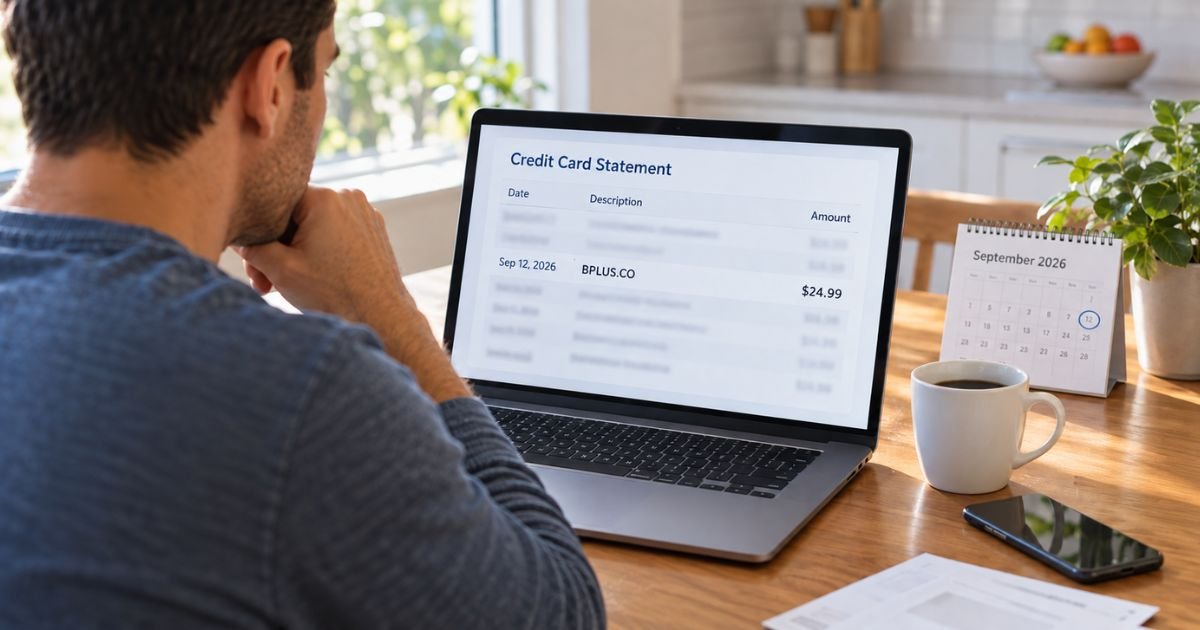
A Bplus Co charge on credit card can look random at first. You open your statement, see an unfamiliar name, and wonder if you missed a purchase.
You are not alone. Many US cardholders see short merchant names that do not match a store they remember. The goal is simple. Figure out whether the charge is yours, then decide what to do next.
What Is a Bplus Co Charge on a Credit Card?
A Bplus Co charge is a billing descriptor. That is the short merchant label your card issuer prints next to a purchase.
It often appears as BPLUS.CO, BPLUS.CO 833-2355372 CA, or a similar string. Banks may also add prefixes like CHECKCARD, POS PURCHASE, PENDING, or PRE-AUTH.
The name on the line is not always the brand you clicked online. Payment processors often shorten a company name. They may add a phone number and a state code, such as CA for California.
Public charge-lookup sites have listed this descriptor since late 2024 and early 2025. Some cardholders said they recognized the purchase. Others said they did not. That mix is common with online merchants.
The charge itself is not a bank fee. It is generally a merchant charge that posted through your card network.
How a Bplus Co Charge Usually Appears
Your statement may not use the exact words “Bplus Co.” Look for close matches.
Common statement labels include:
- BPLUS.CO
- BPLUS.CO 833-2355372 CA
- CHKCARD BPLUS.CO
- CHECKCARD BPLUS.CO
- POS PURCHASE BPLUS.CO
- PENDING BPLUS.CO
- PRE-AUTH BPLUS.CO
- POS REFUND BPLUS.CO
A pending line is typically a hold, not the final settled amount. The posted amount can change after the merchant finishes the sale.
The phone digits in the descriptor are part of the merchant text. They are not automatically your bank’s fraud line. Use the number on the back of your card if you need issuer help.
Why You Might See This Charge
You typically see a Bplus Co charge after an online checkout. The merchant name that billed your card may not match the website title you remember.
Typical reasons include:
- A one-time online purchase
- A trial that converted to a paid plan
- A recurring subscription you signed up for earlier
- A family member or authorized user buying something
- A refund posting back as BPLUS.CO after a return
Email receipts help more than memory. Search your inbox for the dollar amount, “Bplus,” “BPLUS,” or the date of the charge.
Do not assume every unknown name is fraud. Do not assume every unknown name is safe either. Verify the purchase first.
How to Confirm Whether the Charge Is Yours
Start with records you already have. You can often solve this in a few minutes.
- Match the date and amount to your emails, texts, or app purchases.
- Check household cards and shared wallets.
- Look at browser history and saved merchant accounts for that date.
- Review subscription lists in Apple, Google, PayPal, Amazon, or similar wallets if you use them.
- Compare a pending charge with the later posted amount.
If you find a receipt, the charge is generally legitimate even if the name looks odd. Keep a screenshot. You may need it later if you cancel a renewal.
If you find nothing, treat the charge as unrecognized. Move to cancellation and dispute steps.
What to Do If You Do Not Recognize It
Stay calm. One strange line does not mean your whole card is lost. Act in order.
First, protect the card.
Log in to your issuer app. Watch for other odd charges on nearby dates. If you see a pattern, freeze or lock the card in the app.
Next, try to identify the merchant.
Use the date, amount, and descriptor text. Search only from a source you trust, such as your email or bank app. Avoid random pop-up “refund” sites that ask for your full card number.
Then contact the merchant only if you can verify it.
Some statements show 833-235-5372 next to BPLUS.CO. That number is a descriptor detail, not proof the company is safe to call. If you call, do not read your full card number, CVV, or one-time passcode unless you initiated the call and you are sure you reached the right business.
If you still cannot identify it, call your issuer.
Use the phone number on the back of your card or in the official app. Say you do not recognize a Bplus Co charge. Ask about a dispute and a replacement card if needed.
Federal rules generally give you strong protection on unauthorized credit card charges when you report them promptly. Time limits and documentation rules can vary by issuer. Ask your bank what it needs.
Recurring Billing and Trial Offers
Many mystery charges start as a small checkout. You may have agreed to a trial, a membership, or auto-renew terms during a busy checkout page.
Look for phrases like “subscription,” “renewal,” or a matching amount every 30 days. If the same Bplus Co charge repeats, it is typically a stored payment, not a one-off store visit.
Cancel at the source when you can. A card freeze stops new charges on that card. It may not cancel the merchant account. The company can try another card on file later if one exists.
Ask the merchant for written confirmation if you cancel. Save the email. If billing continues, that record helps your issuer.
How to Dispute a Bplus Co Charge
A dispute is a formal request to your card issuer. It is different from a friendly refund email.
Helpful items to gather:
- Statement date and amount
- Exact descriptor text
- Screenshots of emails or empty search results
- Notes on any call you already made
- Whether the charge is pending or posted
Call or start the claim in your issuer’s app. Explain that you do not recognize the Bplus Co charge. Ask whether they want you to try the merchant first. Some issuers prefer that. Others start the case right away.
Do not promise yourself a refund timeline. Outcomes vary. Some cases end in a credit. Some need more review. Stay polite and keep copies of every note.
If the charge is still pending, ask whether a merchant credit will replace it. Do not spend that pending amount. It can still post.
How to Reduce Mystery Charges Next Time
You can lower the odds of another surprise line.
Simple habits that help:
- Turn on instant transaction alerts in your card app
- Use virtual card numbers for new websites when your issuer offers them
- Keep one card for trials and another for bills
- Review statements weekly, not only at due date
- Cancel unused free trials on your calendar
- Limit who can save your card in shared browsers
Read checkout boxes before you enter your card. Look for auto-renew language. A $1 or $2 authorization is often a card test. A larger follow-up charge may still come later.
If a website feels rushed or hides its company name, use a different payment method or skip the purchase.
Related Names You Might Mix Up
Bplus Co on a card statement is not the same thing as every company with “B Plus” in its name.
Older complaint records exist for a separate CBD seller that used different contact details. Fuel cards, hardware-store clubs, and overseas payment tools also use similar words. Match your exact descriptor, amount, and date. Do not rely on a look-alike brand name.
If your line includes 833-2355372 and CA, stay focused on that text. That is the label your bank received for this transaction.
FAQs About Bplus Co Charge on Credit Card
Q. Is a Bplus Co charge always a scam?
A. No. A Bplus Co charge is a merchant descriptor. It can be a real purchase you forgot, a subscription, or an unrecognized charge. Check receipts and your issuer before you decide.
Q. Why does the charge show a phone number and CA?
A. Many processors add a support number and a two-letter location code to the billing label. CA typically points to California as the listed merchant location. That text can help you search. It is not the same as the fraud number on your card.
Q. Can I ignore a pending Bplus Co charge?
A. You should not ignore it. A pending charge can still post. Match it to a purchase now. If you do not recognize it, lock the card and contact your issuer while details are fresh.
Q. How do I stop another Bplus Co charge from posting?
A. Cancel any related subscription at the merchant if you can identify it. Then ask your issuer about a block, dispute, or new card number. Watch the next statement to confirm the billing stopped.
Conclusion
A Bplus Co charge on your credit card is a merchant label, not a secret bank fee. Search your email, match the date and amount, and look for a subscription you may have missed.
If the charge is still unclear, use your issuer’s official app or the number on your card. Quick checks usually settle the question and protect the rest of your account.
Disclaimer
This article is for general information only. It is not financial, legal, or credit advice. Merchant names, refund rules, and dispute timelines vary by company and card issuer. Verify any Bplus Co charge against your own statement, receipts, and bank records before you act.