Are Parking Lots a Good Investment in 2026?

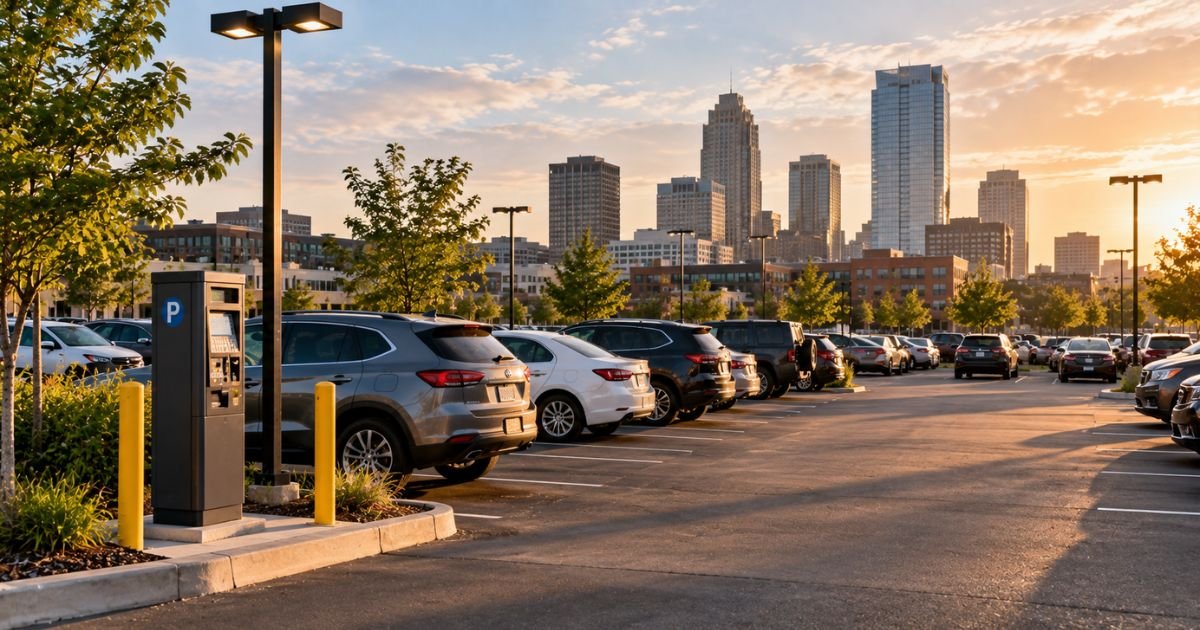
You have probably parked in a paid lot and wondered who owns the land. Many US investors ask the same thing when they look for simple cash flow.
A parking lot can work as an investment. It can also disappoint you if the location, price, or demand story is weak. The answer depends on how you buy it and why people park there.
What Is a Parking Lot Investment?
A parking lot investment is real estate you use to store vehicles for a fee. You may own a paved surface lot, a multi-level garage, or a share of a deal that owns one.
You generally make money two ways. You collect parking income today. You also hold the land underneath, which may rise in value if the site can support a better use later.
Some buyers treat the lot as a small operating business. Others treat it as a “covered land play.” That means parking income helps cover taxes and upkeep while you wait on the dirt.
The parking lots and garages industry in the United States is a multi-billion-dollar business. Industry reports have put recent market size near $13 billion, with mixed growth after the post-pandemic rebound. Results vary widely by city and by type of customer.
How Parking Lots Make Money
Most lots charge by the hour, by the day, or by the month. Event lots near stadiums, arenas, or concert halls can spike on certain nights.
Monthly permit parkers often give you steadier income than walk-up drivers. A hospital, college, airport, or office cluster can support that kind of demand.
You may also add side income. EV charging, advertising, car washes, reserved valet spots, and rooftop or unused-corner leases can help. Those extras are not guaranteed. They depend on power capacity, permits, and real usage.
Pricing is usually local. A downtown space can cost many times more than a suburban lot. Your net number after expenses matters more than the posted hourly rate.
When Parking Lots Can Be a Good Investment
Parking lots can be a good investment when several demand sources sit nearby. Think hospitals, hotels, restaurants, housing, transit, airports, campuses, or venues.
They tend to look better when new competing supply is hard to add. Tight land, high construction costs, and zoning limits can protect an existing lot.
They also look better when the price is backed by verified income, not a hopeful story. Ask for ticket-level data, monthly occupancy, and refunds. Seller summaries can overstate a normal year.
Surface lots on cheap land can pay back faster than garages because they cost less to build. Garages can produce more income per acre in dense cities. They also cost far more to build and maintain.
Recent construction-cost surveys have put a typical US structured space in the low-to-mid five figures, with a wide spread by city. Surface improvements are usually much lower per space, but you still pay for land, paving, lighting, and drainage.
Airport and event parking has generally drawn stronger investor interest than office-only downtown lots in high hybrid-work markets. That split matters if you are comparing deals.
What It Typically Costs to Own One
Your purchase price is only the start. You also fund paving, striping, lighting, drainage, signs, gates or kiosks, cameras, and sometimes an attendant booth.
Ongoing costs usually include:
- Property taxes and insurance
- Lot management or a parking operator
- Payment systems and credit-card fees
- Lighting, cameras, and software
- Snow, sweeping, pothole, and restriping work
- Liability reserves and legal costs
Industry guides often cite much lower yearly upkeep per space on a surface lot than on a garage. Treat any range as a starting point. Your climate, traffic, and structure age can change the bill.
Property tax can be a quiet killer on prime urban land. As the assessed value rises, the tax can eat a larger share of parking income.
You should also budget capital projects. Asphalt does not last forever. Garages need concrete repair, waterproofing, and equipment replacement.
The Main Risks You Should Weigh
Demand can fade. Hybrid work, rideshare, better transit, and cheaper on-street parking can cut occupancy. Cities that ease parking minimums may also allow new projects to open with fewer spaces, which can shift long-term supply.
Income quality can be weaker than it looks. Broken gates, loose cash handling, free validations, and weak enforcement can inflate a seller’s numbers.
Exit risk is real. A specialized lot can attract fewer buyers than a small apartment building. If your whole thesis is future redevelopment, zoning delays or a weak capital market can stall that plan.
Liability and weather add cost. Slip-and-fall claims, vehicle damage, flooding, and poor lighting can raise insurance premiums.
Longer-term technology risk exists, but the timing is uncertain. Autonomous vehicles and shared fleets may reduce parked time in some places. That is a scenario to stress-test, not a date you can mark on a calendar.
Ways You Can Invest Without Guessing
You can buy a lot or garage directly if you have the capital and a plan to operate it. Many owners hire a professional operator and keep ownership of the land.
You can also join a private syndication or fund if a sponsor is buying a specific facility. Those deals are often illiquid and may be limited to accredited investors. Read the fees, debt, and exit plan before you wire money.
Public REITs and real estate funds can give you indirect exposure. Parking income often sits inside airports, hotels, hospitals, retail, or mixed-use portfolios. A fund name rarely means you own a dedicated parking strategy, so read the holdings.
You can improve an asset you already control. Adding paid parking, better enforcement, or a few EV chargers on an underused pad may raise income. Local permits and utility capacity still decide what is possible.
How to Judge Whether a Deal Works for You
Start with the customer, not the asphalt. Who parks there on Tuesday at 10 a.m., and who parks there on Saturday night?
Count competing spaces within a short walk. Include garages, surface lots, and on-street rules. A “busy” lot next to three empty lots is a warning.
Verify net operating income with source records. Then stress the number. What happens if monthly parkers drop 20 percent, taxes rise, or you need a new surface in year three?
Compare the income value with the land value. In many urban cores, a surface lot trades more like a development site than like a parking business. That can be fine if you know you are buying dirt.
Get quotes for insurance, operator fees, and near-term repairs before you accept the seller’s pro forma. Walk the lot after rain. Drainage problems show up fast.
Talk with a local land-use attorney or planner about zoning and future use. Do not treat a possible high-rise as free upside unless the rules and the market support it.
Typical Deal Checks
| Item | Why it matters |
|---|---|
| Ticket and permit data | Shows real demand, not a marketing average |
| Nearby demand sources | Hospitals and airports often hold up better than one office tower |
| Property tax trend | Rising land value can shrink cash flow |
| Capex and drainage | Paving and garage repairs can wipe out a year of profit |
| Zoning and exit | Tells you if you own a parking business, a land bank, or both |
FAQs About Are Parking Lots a Good Investment
Q. How much money do you need to invest in a parking lot?
A. Direct ownership often takes a large down payment because lots and garages are commercial real estate. Smaller checks may be possible through funds or syndications, but minimums, fees, and lockup periods vary. Public shares in a diversified REIT can start with the price of one share, though that is not the same as owning a specific lot.
Q. What kind of return should you expect?
A. Buyers often price facilities off documented net operating income using capitalization rates that commonly fall in a broad mid-single-digit to high-single-digit range, and sometimes wider when demand is uncertain. Surface lots with redevelopment potential may price more like land than like parking cash flow. Any marketed “high teens” return should be treated as a claim to verify, not a norm.
Q. Are parking lots easier than rental homes?
A. Operations can look simpler because you have no kitchens or tenants calling about dishwashers. You still handle safety, payments, pavement, taxes, and insurance. Vacancy can arrive in clusters if a nearby employer changes its office policy. Liquidity is often lower than a small residential sale.
Q. Will electric cars or self-driving cars ruin the investment?
A. Electric vehicles may create a chance to add charging income, but chargers cost money and sit idle if drivers do not use them. Self-driving and shared cars could reduce parked time over a long horizon. Most underwriting still needs the lot to work as parking for many years on its own numbers.
Conclusion
Are parking lots a good investment? They can be, when you buy proven demand at a price the income can support, and when you keep cash set aside for taxes and repairs.
They work best as either a simple cash-flow asset or a patient land hold, not as a shortcut. If the location, records, and reserves line up, a lot can be a calm, useful piece of a broader plan. If they do not, you are just buying empty pavement.
Disclaimer
This article is for general information only. It is not financial, tax, legal, or investment advice. Parking rules, taxes, zoning, insurance, and returns vary by city, property, and owner. Confirm any deal with the seller’s records, your own advisors, and the companies that tax, insure, or operate the site.