Is Timberland a Good Investment in 2026?

You may be asking this after hearing that trees “grow while you sleep.” That line is partly true. Timberland can add slow growth and some inflation protection. It is not a set-it-and-forget-it cash machine.
This guide explains how timberland earns money, what recent returns look like, and how REITs differ from owning a tract. It is not a buy or sell call. Match any allocation to money you can leave untouched for years.
What Timberland Investing Means
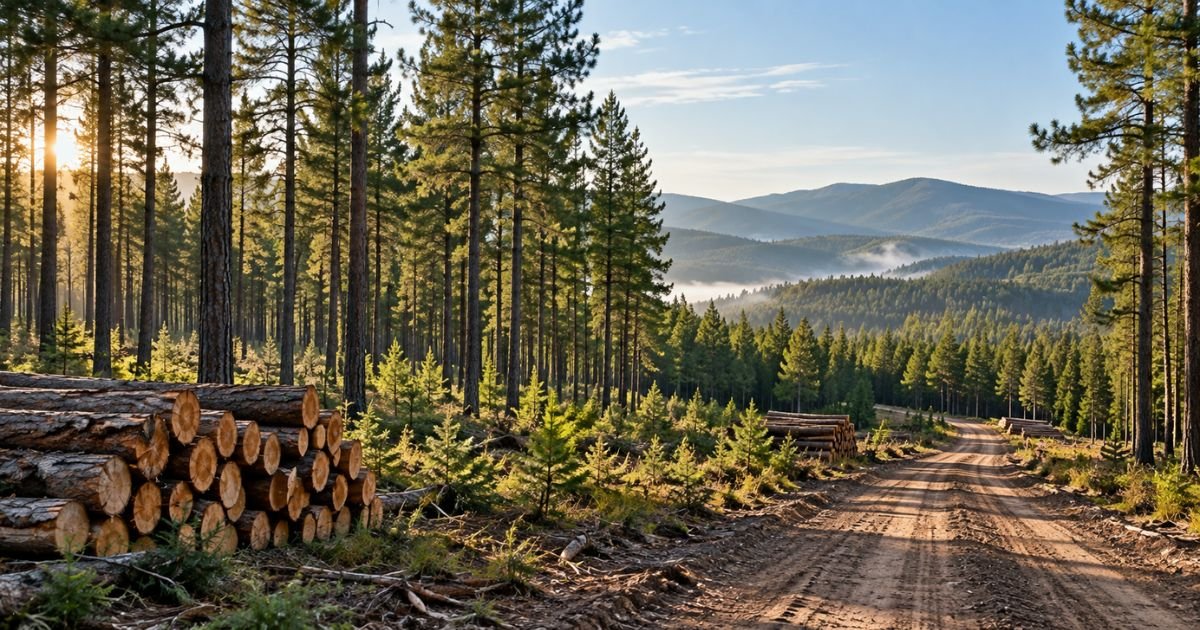
Timberland investing means you put money into forest land grown for wood. You may also earn from land sales, hunting leases, conservation deals, or carbon programs. The trees and the dirt are both part of the asset.
This is different from farmland. Crops are planted and sold on a short cycle. Trees can take 20 to 35 years, or longer, depending on the species and region. You can often delay a harvest if log prices are weak. That option is one reason institutions like the asset.
A timberland investment is good for you only if you can wait. Cash yield from timber has been modest in recent years. A large share of long-run return has come from land value and biological growth, not a fat annual rent check.
The main public benchmark is the NCREIF Timberland Index. It tracks forests owned by large managers. At the end of 2025 that index covered about 13.4 million acres and $31 billion of value.
The average value was about $2,300 per acre. The US South made up about 65% of the index. The Pacific Northwest was next, at a higher price per acre.
How Returns Have Looked
NCREIF data shows a mixed recent picture.
In 2025 the index returned about 4.6%. Income, often measured as EBITDDA from operations, was about 1.7%. Appreciation was about 2.9%. That income rate was the lowest since 2009 and the fifth straight year of decline.
Over about 15 years through 2025, total annualized returns were near 5.9%, split between cash operations and rising appraised values.
The five years through 2025 were stronger, near 8.6%, and beat farmland and commercial property indexes in that window. One year does not cancel a long record. It does show that cash yields can shrink when lumber demand is soft.
The South led in 2025 with a total return near 6%. The Northwest was weaker. The Northeast posted a negative year. Region matters as much as the national average.
Trees still add volume each year if the stand is healthy. That biological growth can support value even when sawmills slow down. It does not protect you from fire, storm, or a long housing slump.
| Recent timberland snapshot | Approximate figure |
|---|---|
| NCREIF 2025 total return | About 4.6% |
| NCREIF 2025 operating income | About 1.7% |
| NCREIF 15-year annualized return | About 5.9% |
| Index average value, end of 2025 | About $2,300 per acre |
| Q2 2026 quarterly total return | About 1.0% |
These figures are institutional and appraisal-based. Your result after fees, taxes, and a small tract can look different.
The Main Ways You Can Invest
You generally have three doors.
1. Buy forest land yourself
You need a large check, a forester, property taxes, insurance, and a plan for roads and harvests. Selling a timber tract can take many months. A storm or a beetle outbreak hits you first.
2. Buy a timber REIT
Public REITs own millions of acres and often run related wood-product businesses. Weyerhaeuser (WY) is the largest US name, with roughly 10 million acres.
In mid-September 2026 it recently traded near $22, with a regular dividend around $0.84 a year, or about a 3.8% yield. The company can add extra cash returns in stronger years.
Rayonier and PotlatchDeltic agreed to combine, which shrinks the list of separate public timber REITs. Share prices move with the stock market, lumber prices, and housing news. That is more volatility than the smoothed NCREIF index.
There is also a global timber-and-forestry stock ETF, often traded under the ticker WOOD. That fund holds forest companies, not a single pine stand. Fees and stock swings still apply.
3. Use a TIMO or private fund
Timberland investment management organizations run commingled funds for institutions and some wealthy investors. Lockups of 8 to 15 years are common. Minimums are high. You get closer exposure to biological growth. You give up easy exits.
Do not confuse a REIT share with a deed to 40 acres. One you can sell tomorrow. The other you may hold until the trees are ready.
Risks You Should Weigh
Timberland is a real asset. It still has real risks.
- Housing and lumber. New homes and repairs drive sawlog demand. High mortgage rates can slow harvest income.
- Price cycles. Stumpage, the price paid for standing trees, can stay flat even when land values rise.
- Fire, wind, ice, and pests. Insurance may not cover every loss.
- Climate and drought. Stress can slow growth or raise fire risk.
- Illiquidity. Direct land and private funds are hard to sell fast.
- REIT market risk. Public shares can fall when stocks fall, even if the trees are fine.
- Fees and taxes. Forest management, property tax, and fund costs cut what you keep.
- Policy. Carbon markets, harvest rules, and trade policy can change.
Land near towns can sell for development at a premium. That “higher and better use” option helps some owners. It is not available on every remote tract.
Timberland has often held up when consumer prices rise, because wood and land are physical. That tendency is not a promise in every year.
Who Might Find Timberland Worth Considering
Timberland may fit you if you already have cash reserves and a long horizon. Think a decade or more, not a two-year trade.
It may be a better match if you want a real asset that does not move tick-for-tick with your stock funds. It may be a worse match if you need high current income. Recent operating yields have been thin.
A simple way to think about it:
- You understand that trees grow slowly and lumber demand is cyclical.
- You can hold through a weak housing year.
- You compared REIT dividends with the lockup of private funds.
- You will not buy a tract you cannot afford to insure and manage.
If those points do not fit, a small timber REIT position, or no timber at all, may be the calmer choice. A broad stock-and-bond mix is still the core for most households.
How to Judge Progress Without Guessing
Skip the “trees print money” slogans. Use a short list.
- NCREIF income versus appreciation each year
- Regional log prices and housing starts
- For REITs, dividend policy and wood-products earnings
- Fire history, insurance, and road access on any direct tract
- All-in fees on a private fund, plus the lockup date
Ask what happens if harvests are delayed three years. If the pitch only works if lumber soars, the deal is thinner than it sounds.
FAQs About Is Timberland a Good Investment
Q. Does timberland pay a steady rent like an apartment?
A. Not usually. Cash from harvests can be lumpy. You may wait years between cuts. Recent institutional income rates have been in the low single digits. Land-value change and tree growth often make up the rest.
Q. Is a timber REIT the same as owning a forest?
A. No. A REIT gives you shares in a company that owns forests and may run mills. You get daily liquidity and a dividend that can change. You do not pick which stand to cut. The stock can swing more than private timberland indexes.
Q. How is timberland different from farmland?
A. Farmland is tied to annual crops and cash rents. Timberland is tied to multi-year tree growth and wood markets. You can often postpone a harvest. You cannot postpone a planting season in the same way. Risks such as fire and beetles are more specific to forests.
Q. Should I buy timberland or a regular index fund?
A. An index fund is cheaper to sell and easier to size. Timberland can add diversification if you can lock capital up. Many people are better served by a small REIT slice, or none, until their emergency fund is solid.
Conclusion
Is timberland a good investment? It can be a long-term real-asset sleeve if you accept modest cash yields and slow compounding. It is not a substitute for a simple diversified portfolio.
Institutional forests still produced mid-single-digit total returns in 2025, with weaker harvest income and more reliance on land value.
Public timber REITs offer an easier on-ramp and more volatility. Private funds offer closer exposure and a longer wait.
Size any position with money you will not need soon, then judge the trees by region, housing demand, fees, and exit terms.
Disclaimer
This article is for general information only. It is not financial, tax, legal, or forestry advice, and it is not a recommendation to buy or sell timberland, REIT shares, or related funds. Timber prices, land values, dividends, and regulations vary by region and can change. Verify current filings, offering documents, and account-specific questions with the issuer, a licensed advisor, or a qualified forester before you act.