What Are Index Funds and How Do They Work?

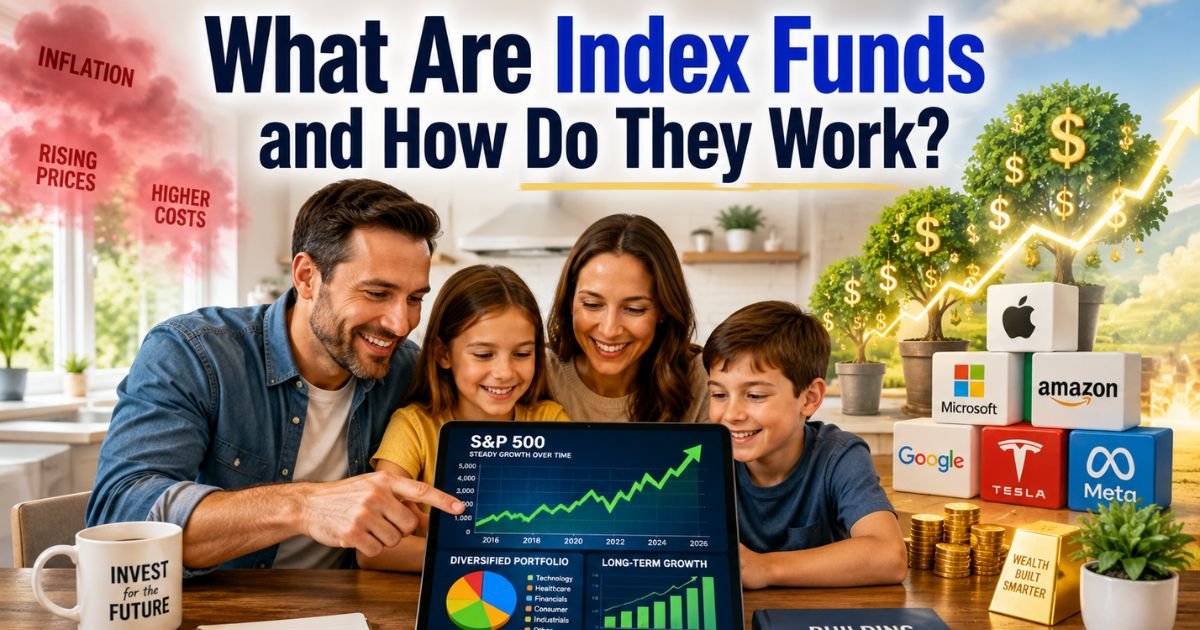
Hey there, smart saver. Have you ever wondered how some people seem to grow their money steadily without chasing hot stock tips or spending hours glued to market news? If you’re nodding along, you’re not alone.
Millions of everyday Americans are turning to index funds as their secret weapon for building wealth the simple way. We’ll unpack exactly what index funds are and how they work, using plain English and real-life examples so you can decide if they’re right for your goals.
The Power of Passive Investing with Index Funds
Index funds sit at the heart of a smarter, hands-off approach to investing that has quietly transformed retirement accounts and brokerage portfolios across the United States.
Instead of trying to beat the market, they simply aim to match it. This idea might sound too straightforward at first, but it has powered the wealth of countless regular folks who don’t have finance degrees or insider connections.
Think about it. Markets go up and down, yet over decades, broad market indexes like the S&P 500 have delivered average annual returns around 10 percent before inflation. Index funds capture that growth automatically.
No more second-guessing or timing the market. In today’s fast-paced world of 2026, with economic shifts and tech disruptions, these funds offer a calm, reliable path forward.
What Exactly Are Index Funds?
At their core, index funds are investment vehicles that track a specific market index. An index is basically a basket of stocks or bonds chosen to represent a slice of the market.
The most famous one, the S&P 500, includes 500 of the largest U.S. companies. Your index fund buys tiny pieces of all those companies in the same proportions.
So if Apple makes up 7 percent of the index, your fund owns about 7 percent of its holdings in Apple shares. It’s that simple. This setup means the fund’s performance mirrors the index almost exactly. You get the market’s average return, minus a tiny fee.
Unlike picking stocks yourself, you don’t need to research every company. The fund does the heavy lifting by following a set of rules that define the index. It’s like buying the entire haystack instead of hunting for needles.
How Do Index Funds Work? A Clear Step-by-Step Breakdown
Let’s walk through the mechanics so you see exactly how index funds work in practice. First, a fund manager or computer algorithm creates a portfolio that matches the index. They buy shares of every stock in the right amounts.
When you invest money into the fund, you’re buying shares of this portfolio. Your returns come from two places: dividends paid by the companies inside the fund, and any increase in the overall value of those holdings.
If the S&P 500 rises 8 percent in a year, your index fund should rise roughly the same amount, before fees.
Rebalancing happens quietly in the background. If one company grows too big or too small relative to the index, the fund adjusts automatically. You never have to lift a finger.
Most index funds are either mutual funds, which price once per day, or exchange-traded funds (ETFs), which trade like stocks throughout the day. Both versions follow the same indexing principle but differ slightly in flexibility and tax treatment.
Index Funds Versus Actively Managed Funds: The Key Differences
Many new investors ask how index funds stack up against traditional actively managed funds. Here’s the big picture. Active funds hire experts who try to pick winning stocks and beat the market. They charge higher fees, often 0.5 to 1 percent or more each year, because of all that research and trading.
Index funds, on the other hand, stay passive. They skip the guesswork and keep expenses super low, sometimes as little as 0.03 percent annually. Over time, those tiny savings compound into serious money. Studies consistently show that most active funds underperform their benchmarks after fees.
A quick comparison table makes this crystal clear:
| Feature | Index Funds | Active Funds |
|---|---|---|
| Goal | Match the market index | Beat the market |
| Expense Ratio | Very low (0.03-0.2%) | Higher (0.5-1%+) |
| Management Style | Passive, rules-based | Active stock picking |
| Typical Long-Term Results | Close to index returns | Often lag after fees |
| Best For | Long-term, hands-off investors | Those who want excitement |
This table isn’t just theory. I’ve watched friends pour money into hot active funds only to see them trail simple index funds after a few years. The data backs it up every time.
Popular Types of Index Funds You Can Choose From
Not all index funds are created equal, and that’s good news because it gives you options. The classic S&P 500 index fund remains the go-to for broad U.S. large-company exposure. Vanguard’s VFIAX or its ETF version VOO are popular examples that millions of Americans own.
You can also find total stock market funds that cover thousands of U.S. companies, big and small. International index funds add stocks from Europe, Asia, and emerging markets for extra diversification. Bond index funds track government or corporate debt if you want steadier income with less volatility.
Sector-specific ones focus on tech, healthcare, or clean energy if you want targeted exposure without picking individual stocks. In 2026, many investors blend a few of these for a custom mix that matches their age and risk tolerance. The beauty is you can start with just one broad fund and expand later.
Top Benefits That Make Index Funds a Smart Choice
Why do so many seasoned investors swear by index funds? The advantages add up fast. First, diversification spreads your risk across hundreds or thousands of holdings. One bad apple won’t spoil the bunch.
Second, the rock-bottom costs leave more money working for you. A 0.1 percent fee instead of 1 percent can mean tens of thousands of extra dollars over 30 years. Third, they deliver consistent, market-matching returns that have historically outpaced inflation and most active strategies.
Tax efficiency is another win, especially with ETFs that rarely distribute capital gains. Plus, they’re incredibly easy to buy through any major brokerage like Fidelity, Charles Schwab, or Vanguard.
No special accounts or minimums needed beyond what the fund itself requires. For busy parents or side-hustle entrepreneurs, this simplicity feels like a breath of fresh air.
Potential Drawbacks to Keep in Mind
Of course, no investment is perfect, and index funds have a couple of honest limitations. They won’t beat the market during hot streaks when a few superstar stocks dominate. If the whole index drops, your fund drops too. That’s the trade-off for matching average returns.
They also lack the thrill some people crave from individual stock picking. And while fees are low, you still pay them. In very short time frames, like less than five years, they might feel boring compared to flashier options.
The fix? Pair them with a small portion of your portfolio in other assets if you want more spice. Most experts recommend holding them for the long haul, at least 10 years, to let compounding do its magic.
How to Start Investing in Index Funds Today
Getting started with index funds is easier than ever. Open a brokerage account if you don’t have one. Many platforms let you begin with as little as $1 through fractional shares.
Next, decide on your goals. For retirement, consider a target-date fund that automatically shifts to safer index funds as you age. Fund your account, choose your fund, and set up automatic contributions so you invest consistently.
Review once a year, rebalance if needed, and ignore daily noise. That’s it. Resources like the SEC’s investor website or Vanguard’s educational hub can guide you further without any sales pitch.
You’ve now got a solid grasp on what index funds are and how they work. They turn complicated investing into something approachable and effective for real people like you and me.
FAQs About What Are Index Funds and How Do They Work
Are index funds a good choice for beginners?
Absolutely. Index funds shine for beginners because they require zero stock-picking expertise and offer instant diversification at low cost. Start with a broad S&P 500 fund, contribute regularly, and let time work its magic. Most new investors see steady growth without the headaches of active trading.
How much do index funds typically cost to own?
Fees are one of their biggest strengths. Many charge expense ratios under 0.1 percent per year, meaning you keep almost all the returns. Compare that to active funds that might cost 10 times more. Always check the prospectus, but low costs are the norm across major providers like Vanguard and Fidelity.
What’s the difference between index mutual funds and index ETFs?
Both track indexes the same way, but ETFs trade throughout the day like stocks and often have slightly lower fees plus better tax efficiency. Mutual funds price once daily at the end of trading. Choose based on your brokerage and whether you want intraday flexibility. Either works great for long-term passive investing.
Conclusion
In the end, index funds offer a straightforward path to growing your money without the drama of trying to outsmart the market. They’ve helped regular families build real wealth for decades, and they continue to do so in 2026 and beyond. Take that first small step today. Your future portfolio will thank you.
Disclaimer: This article is for informational and educational purposes only. It is not financial, investment, or tax advice. Always consult a qualified financial advisor before making any investment decisions, as past performance does not guarantee future results. Market conditions can change rapidly, and all investments carry risk, including the potential loss of principal.