Top Crypto Micro-Savings Apps for Daily Rounding

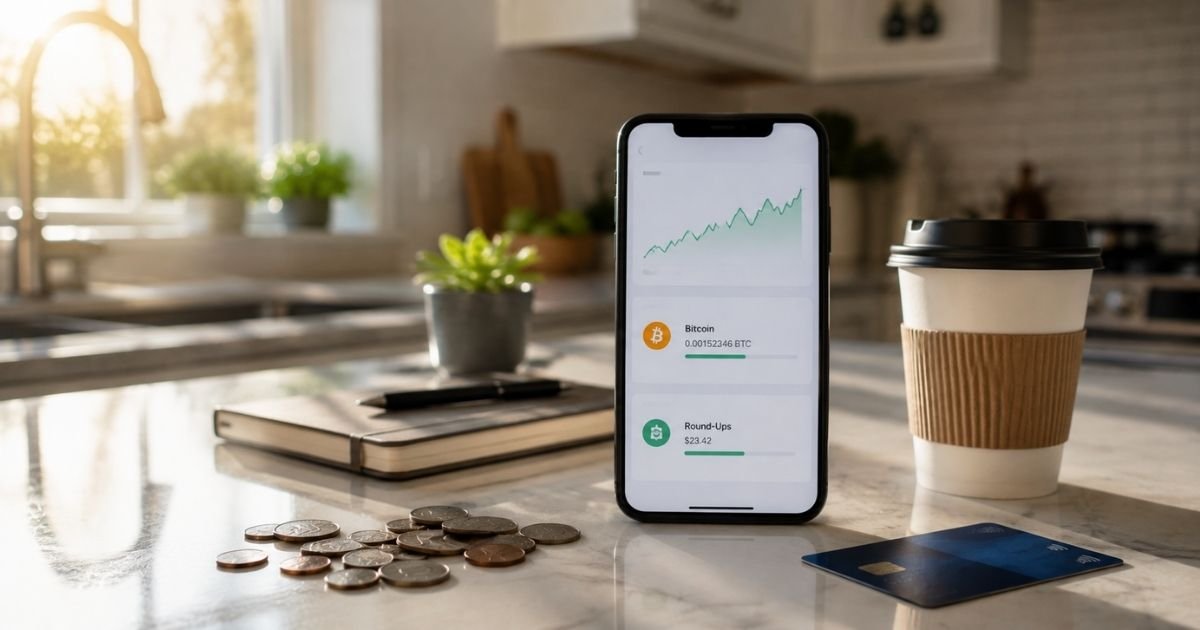
You already spend small amounts every day. A coffee here. A grocery trip there. A few crypto micro-savings apps can round those purchases up and put the spare change toward Bitcoin.
That habit can feel almost invisible. You still need to know how the apps work, what they charge, and what risks you take.
What Crypto Micro-Savings Apps For Daily Rounding Are
Crypto micro-savings apps for daily rounding typically watch your card or bank activity. They round each purchase up to the next dollar. Then they set the leftover cents aside.
When those leftover cents reach a set amount, the app generally buys a small slice of crypto. For most of these tools, that crypto is Bitcoin.
This is not the same as a high-yield bank account. Your spare change is usually converted into a digital asset that can rise or fall in value. Policies, fees, and buy thresholds typically vary by app.
How Daily Rounding Usually Works
Say you spend $4.35. The app may treat that as $5.00. The extra $0.65 goes into a running tally.
You do not always buy crypto on every purchase. Many apps wait until your tally hits a minimum, often around $5 to $20. That helps keep tiny trades from eating you alive in fees.
Some apps also let you multiply the round-up. A 2x setting on a $0.65 remainder would set aside $1.30 instead. That speeds up buying. It also pulls more cash from your account.
The money still has to come from somewhere. If your checking balance is tight, even small round-ups can add up.
Why People Use These Apps
Daily rounding can make Bitcoin saving feel automatic. You do not have to remember to buy.
It also spreads purchases over time. That approach is often called dollar-cost averaging. You buy a little on many days instead of guessing one perfect day.
The amounts are usually small. That can make it easier to start if a large buy feels scary.
Small does not mean risk-free. Crypto prices can swing hard. Fees can also take a bigger bite on tiny purchases.
Coinbits: Spare Change From Linked Accounts
Coinbits is a U.S. Bitcoin app built around automatic saving. Its site describes the product as a way to turn spare change into Bitcoin.
You typically link checking or card accounts through a bank-connection tool. Coinbits then reads purchase amounts when you sign in. Official help pages say it does not keep a lasting record of your store-by-store purchase details.
Each linked purchase is rounded to the next dollar. Those remainders stack together. Coinbits says it buys Bitcoin when the total exceeds $20.
You can usually raise the pace with a multiplier, such as 2x, 3x, 5x, or 10x. Some users also add a whole-dollar round-up so even $10.00 purchases set money aside.
Coinbits is Bitcoin-only. That keeps the app simple. It also means you are not spreading spare change across many coins.
Pricing can change, so check the app before you enroll. The company has offered a free Basic plan with an exchange spread, and a low monthly club option that advertises zero fees and zero spread up to a monthly buy limit.
Fold: Round-Ups on Fold Card Spend
Fold is a U.S. Bitcoin finance app. It pairs card spending with automated Bitcoin buys.
Round-ups on Fold generally apply to Fold Card purchases, not every card in your wallet. You turn the feature on in the app and pick a multiplier, typically 1x, 2x, 5x, or 10x.
On a $3.50 purchase, a 1x setting would usually set aside $0.50. A 2x setting would set aside $1.00. Fold help pages say a Bitcoin buy is triggered after the tracker fills, and you need enough cash in your Fold account to cover the purchase.
Fold also offers other automations. Auto-stack is a scheduled recurring buy. Direct-to-Bitcoin can convert a share of deposits.
Fold says verified users must be at least 18 and live in the United States. Bitcoin services have been described as available nationwide, with custody support through BitGo. Bitcoin held this way is generally not FDIC or SIPC insured.
Fee details have shifted as Fold updated pricing. Confirm current buy fees, spreads, and any membership changes inside the app.
Cash App: Everyday Rounding Inside a Payments App
Cash App is already on many U.S. phones. That makes it an easy place to try Bitcoin rounding if you already use the Cash Card.
Cash App has offered a round-up feature that can send spare change into Bitcoin. It also supports recurring Auto Invest buys. Company updates in 2026 also described rounding spare change into Bitcoin as part of its everyday Bitcoin tools.
Availability can depend on your account, card, and state rules. The feature is typically tied to Cash Card spending rather than every outside debit card.
Cash App is convenient. It is also custodial by default. You can usually withdraw Bitcoin later, but you should check holds, limits, and current pricing first.
Cash App pricing is not always a simple posted fee. Reviews often point to a spread built into the buy price. Larger buys and some recurring buys have seen fee cuts, but your rate may still vary.
Recurring Daily Buys If You Want a Set Amount
Not every useful micro-savings app rounds each latte. Some let you buy a fixed small amount every day or every week.
Swan Bitcoin is a U.S. Bitcoin-only platform known for recurring buys. You typically pick daily, weekly, or monthly purchases from a linked bank account. That is not spare-change rounding. It can still create a daily saving habit.
River is another U.S. Bitcoin platform with recurring buys. It has advertised zero platform fees on recurring purchases. Direct deposit conversion is another way to turn part of your paycheck into Bitcoin.
These tools can pair well with a round-up app. Just watch the total cash leaving your checking account.
What to Compare Before You Link a Card
Start with where the money comes from. Some apps pull from any linked bank account. Others only round purchases on their own card.
Then check the buy threshold. A $5 trigger buys more often than a $20 trigger. More frequent buys can mean more fee drag.
Look at multipliers next. A 10x setting can grow a stack faster. It can also surprise you at the end of a heavy spending week.
Ask how the app holds your Bitcoin. Custodial apps keep the coins for you. Many let you withdraw to your own wallet later. Withdrawal fees and waiting periods typically vary.
Finally, confirm you are eligible. Age, state, and identity checks are common. An app that works in one state may limit features in another.
| App | Rounding style | Typical trigger | Best if you want |
|---|---|---|---|
| Coinbits | Linked-account spare change | About $20 pooled | Bitcoin-only saving from everyday bank spend |
| Fold | Fold Card spare change | Small pooled buy after the tracker fills | Card rewards plus automated stacking |
| Cash App | Cash Card spare change | Per your app settings | One app for payments and Bitcoin |
| Swan or River | Set daily or weekly buys | The schedule you choose | A fixed habit instead of purchase rounding |
Figures above are general patterns from public help pages and product descriptions. Always verify the live settings in the app.
Risks You Should Expect
Bitcoin can drop after you buy. Spare-change buys do not remove that risk. They only spread it across many small purchases.
Fees matter more on tiny trades. A spread of 1% to 2% on a $20 buy is easier to shrug off than the same spread on many $2 buys.
Linked-account access is another issue. You are giving an app a view of transactions. Use a strong password and turn on two-factor authentication.
Overdraft risk is easy to miss. If several round-ups hit at once, your checking account can dip lower than you planned.
Selling later can create a tax event. In the U.S., crypto is generally treated as property. Each sale may need to be reported. Keep records, and talk with a tax professional if you are unsure.
How to Set Up a Rounding Habit Safely
Pick one app first. Linking three apps to the same spending can drain cash faster than you expect.
Start with a 1x multiplier. Watch one or two statements before you raise it.
Keep an emergency cash cushion. Rounding works best when the extra dollars are truly extra.
Turn off the feature before a big spending week if cash is tight. Most apps let you pause.
If you plan to hold Bitcoin for a long time, learn how withdrawals work. Moving coins to a wallet you control is a separate step from the first round-up.
FAQs About Top Crypto Micro-Savings Apps For Daily Rounding
Q. Do these apps buy Bitcoin on every purchase?
A. Usually no. Many apps add up spare change first, then buy when the tally hits a minimum such as $5 or $20. That process may vary by issuer.
Q. Can I use any debit card for crypto round-ups?
A. Not always. Coinbits typically links outside bank accounts. Fold and Cash App generally round purchases made with their own cards. Check the app before you assume every card will count.
Q. Are rounded-up Bitcoin purchases FDIC insured?
A. Generally no. Cash in a partner bank account may have deposit insurance. Bitcoin itself is typically not covered by FDIC or SIPC. Confirm the exact setup with the company.
Q. How much spare change can daily rounding actually move?
A. It depends on how often you swipe and whether you use a multiplier. A few purchases a day might set aside only a few dollars a week. Heavy card use plus a higher multiplier can move much more.
Conclusion
Top crypto micro-savings apps for daily rounding can turn leftover cents into a quiet Bitcoin habit. Coinbits, Fold, and Cash App are the clearest U.S. options for true purchase rounding. Recurring-buy apps can fill the same role if you prefer a set daily amount.
Start small. Read the fee screen. Keep cash you cannot risk out of the round-up pool.
Disclaimer
This article is for general information only. It is not financial, tax, or legal advice. Crypto values can fall, and app features, fees, and eligibility typically vary by company and state. Verify every setting and tax question with the app, your bank, or a qualified professional before you enroll.