What is IRS USATAXPYMT on Bank Statement?

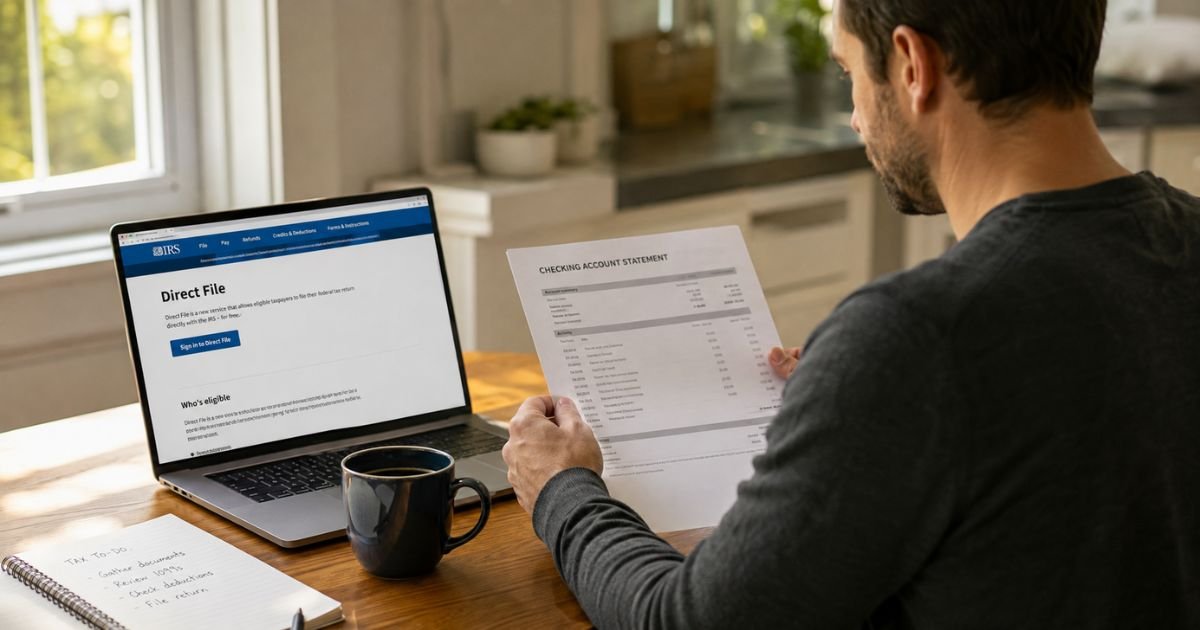
Seeing IRS USATAXPYMT on your bank statement can feel alarming. The line is usually short and easy to miss until the amount hits.
In most cases, this is not a random merchant charge. It is typically an electronic federal tax payment pulled from your checking or savings account.
What IRS USATAXPYMT Means
IRS USATAXPYMT is shorthand for a U.S. tax payment sent to the Internal Revenue Service. Your bank often shortens “USA Tax Payment” to fit the statement line.
The debit generally moves through the Automated Clearing House, or ACH, network. That means money left your account and went to the U.S.
Treasury for a federal tax amount tied to your Social Security number or Employer Identification Number.
Your bank may print a slightly different label. The meaning is usually the same.
| What you may see | What it typically means |
|---|---|
| IRS USATAXPYMT | Federal tax payment by ACH |
| IRS USA Tax Pymt | Same payment, shorter bank text |
| IRS DES:USATAXPYMT | IRS payment with a bank description code |
| ACH Withdrawal IRS USATAXPYMT | Pending or posted ACH tax debit |
| IRS USATAXPYMT plus a date | Same payment, with a process date |
This label is generally for a bank-account payment.
Card payments to the IRS typically use a different statement name, such as a United States Treasury tax payment through an approved processor.
Why This Charge Appears on Your Statement
You usually authorized this withdrawal, even if you forgot the date. That authorization can happen months before the money leaves your account.
Common triggers include a balance due on your Form 1040, an estimated tax payment, an extension payment, or a scheduled installment.
Businesses also see this label when federal payroll taxes or other business deposits leave the operating account.
The amount should generally match a payment you set up. Compare the debit to your tax software confirmation, Direct Pay receipt, or IRS online payment history.
How the Payment Usually Starts
Several official paths can create an IRS USATAXPYMT debit. Knowing the path helps you find the confirmation number.
IRS Direct Pay
This is a free IRS service. You pay from a checking or savings account on IRS.gov or in the IRS2Go app. You generally get a confirmation number when you submit the request.
Electronic funds withdrawal when you e-file
Tax software does not pay the IRS for you. It typically sends your routing and account numbers so the IRS can pull the amount you approved.
Your IRS online account
You can make a same-day payment or schedule one in advance. You can also review payment history there after you sign in.
A payment plan
If you set up an installment agreement, a recurring ACH debit may post on the date you chose.
Business or payroll deposits
If you run payroll, your provider may send federal income tax, Social Security, and Medicare amounts to the IRS. Those withdrawals can also use this descriptor.
Direct Pay is generally free. You can typically change or cancel a Direct Pay request until two business days before the scheduled date.
Keep the confirmation number. You will need it to look up the payment.
How to Confirm IRS USATAXPYMT Is Yours
Start with the amount and the date. Then match them to a record you already have.
Check these records first:
- Your e-file payment confirmation or email from tax software
- Your Direct Pay confirmation number
- A scheduled estimated tax reminder
- An installment agreement notice
- A payroll tax summary, if you have a business account
Next, sign in to your IRS Individual Online Account when you can.
The IRS says you can view up to five years of payment history there, including estimated tax payments and pending withdrawals.
If you used Direct Pay as a guest, use the “look up a payment” tool with your confirmation number. Give the IRS a couple of business days after the scheduled date before you assume the payment is missing.
Also look at the last four digits of the account on the statement. Confirm the debit came from the same bank account you entered when you paid.
What to Do If You Do Not Recognize the Charge
Stay calm and gather facts before you dispute anything. Many people forget a quarterly estimate or a payment they set while filing.
Ask yourself these questions:
- Did you or your tax preparer enter this bank account when filing?
- Did you schedule estimated taxes earlier this year?
- Do you have an IRS payment plan?
- Does a spouse, bookkeeper, or payroll service use this account?
If the amount is wrong, or you never authorized a bank draft, treat it as urgent. Review recent IRS mail. Then check your IRS online account for a matching payment.
If you still cannot match the debit, contact your bank and report that you do not recognize the ACH withdrawal. Follow the bank’s dispute process and keep copies of everything.
Do not rely on a phone number from a text, email, or pop-up. Use IRS.gov or the phone number printed on a notice you already received.
When a Small Extra IRS Charge Appears
Sometimes the original tax payment fails. Your bank may reject the ACH draft for insufficient funds or a closed account.
If a payment is dishonored, the IRS may assess a penalty. IRS Topic No. 206 explains the general rule.
If the unpaid amount is under $1,250, the penalty is generally $25 or the amount of the payment, whichever is less. If the amount is $1,250 or more, the penalty is generally 2% of the payment.
You may receive Letter 608C explaining that penalty. The IRS generally does not keep resubmitting the same failed item. A clearinghouse may try again.
If a later attempt clears, the dishonored-payment penalty may not apply, but late-payment interest or penalties can still apply if the tax was due earlier.
A $25 line that also says IRS USATAXPYMT is often this penalty, not a new tax bill. Verify that against any IRS letter before you assume fraud.
How to Tell This Apart From a Scam
A real IRS USATAXPYMT line is a bank debit after an authorized payment path. A scam usually starts with pressure, not a quiet statement code.
The IRS generally will not call, text, or email you out of the blue and demand instant payment. It will not ask you to pay with gift cards, cryptocurrency, or a wire to a personal account.
Be extra careful if someone:
- Threatens arrest unless you pay today
- Asks you to move money to “protect” a refund
- Sends a link that is not IRS.gov
- Wants your routing number in a chat or social media message
A posted IRS USATAXPYMT debit is still worth checking. Confirm the amount in your IRS account. Save the confirmation. That record is usually your best proof of payment.
Timing, Holds, and What “ACH Hold” Means
You may see “ACH HOLD IRS USATAXPYMT” before the money fully posts. That hold typically means the bank reserved the funds for an incoming IRS draft.
The hold can last a short time, then convert to a completed withdrawal. Processing time can vary by bank.
Direct Pay help pages generally advise checking your IRS account at least two business days after the scheduled withdrawal date.
If the hold drops and no payment appears in your IRS account, look for a bank rejection. Then check whether you need to make the payment again so you do not miss a due date.
FAQs About IRS USATAXPYMT on Bank Statement
Q. Is IRS USATAXPYMT a scam charge?
A. Usually no. IRS USATAXPYMT typically means a federal tax payment left your bank account by ACH. Still match the amount to your confirmation or IRS payment history before you ignore it.
Q. Why did the IRS take money if I already filed?
A. Filing and paying are separate steps. If you chose electronic funds withdrawal, scheduled Direct Pay, or set an installment date, the debit can post later. The statement date may not match the day you clicked submit.
Q. Can I get this payment reversed?
A. That depends on why it posted. If you authorized it, a reversal may not be available after it clears. Direct Pay cancellations generally must happen at least two business days before the scheduled date. If you did not authorize the debit, contact your bank and review your IRS account right away.
Q. How do I prove I already paid?
A. Keep the confirmation number, the bank statement line, and a screenshot of the matching IRS payment history. Those three items generally help if a later notice says a payment is missing.
Conclusion
IRS USATAXPYMT on your bank statement is typically the IRS collecting a federal tax payment you authorized. The label is just a short way to say USA tax payment.
Match the amount to Direct Pay, your e-file confirmation, a payment plan, or your IRS online account. If nothing lines up, treat the debit as unrecognized and verify it through official IRS records and your bank.
Disclaimer
This article is for general information only. It is not tax, legal, or financial advice. IRS procedures, bank descriptors, and payment rules can change and may vary by account. Confirm any charge or balance with IRS.gov records, your confirmation number, or the company and bank that handle your account.