
What Is DR ADJ REDIST CADV PRIN Charge on Credit Card?

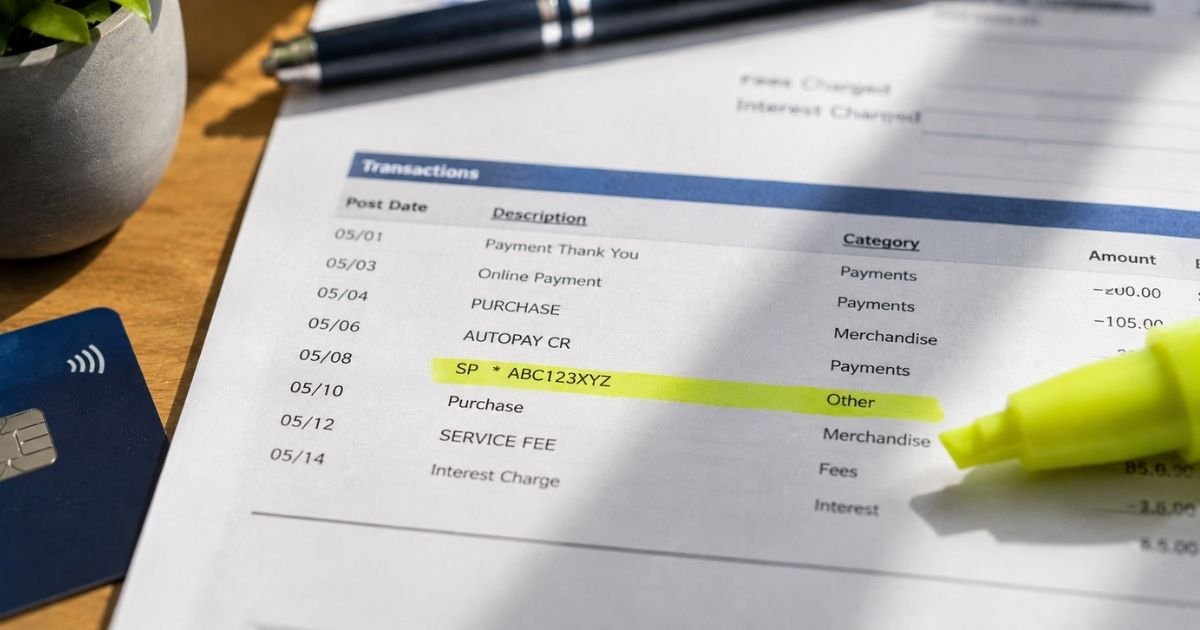
A DR ADJ REDIST CADV PRIN charge on credit card can look like a cash advance you never took. The code is long. The words are scary.
On many American Express statements, this line is an internal balance adjustment. It often posts with a matching credit for the same amount. Your total owed may not change.
What DR ADJ REDIST CADV PRIN Charge on a Credit Card Means
DR ADJ REDIST CADV PRIN is a billing code, not a store name. Cardholders most often see it on American Express accounts.
The letters generally break down like this.
| Code | Likely meaning |
|---|---|
| DR | Debit, money added to what you owe |
| ADJ | Adjustment |
| REDIST | Redistribution, a move between balance types |
| CADV | Cash advance |
| PRIN | Principal, the amount borrowed, not the fee or interest |
So the line usually means a debit adjustment that redistributes cash-advance principal. It is an issuer bookkeeping entry. It is not a grocery store or an ATM brand.
Similar lines include DR ADJ REDIST PURCH PRIN and ADJ REDIST CASH ADV BAL or ADJ REDIST PURCHASE BAL. Those generally move money between a purchase balance and a cash-advance balance.
American Express has not published a plain-English consumer page that defines this exact string. What follows is how the code typically behaves on real statements, plus what cardholders and some representatives have reported. Confirm your own line with the issuer.
Why the Charge Often Comes in Pairs
Look at the same date. Many people see two lines.
One is a debit, such as DR ADJ REDIST CADV PRIN for $84.08. The other is a credit, such as ADJ REDIST PURCHASE BAL or ADJ REDIST CASH ADV BAL for -$84.08.
In those cases, the two amounts cancel. Amex representatives have told cardholders these are internal debits and credits used to “align” the account. The net effect on the balance is typically zero.
That pairing is the first thing to check. A lone debit with no matching credit is a different problem.
Why Issuers Redistribute Principal
Credit cards do not treat every dollar the same.
Purchases often have a grace period if you pay in full. Cash advances generally do not. Cash advances also often carry a higher APR and a separate fee.
Your issuer keeps those balances in different buckets. If a transaction was coded in the wrong bucket, the system may move principal from purchases to cash advances, or the other way around.
Cardholders have reported seeing this after points redemptions, Plan It installment activity, or small merchant corrections. Those reports are anecdotes. Your card’s terms still control how interest and fees work.
Is This a Real Cash Advance?
Not always.
A true cash advance is when you take cash from the card at an ATM, a bank teller, or a cash-like purchase. Those usually show a merchant or ATM name. They also tend to add a cash-advance fee.
DR ADJ REDIST CADV PRIN is usually the issuer moving principal on paper. If the debit and credit match, you typically did not walk away with extra cash.
Still, the words matter. If principal sits in the cash-advance bucket, interest may start right away under your card agreement. That is why you should confirm there is no new fee and no leftover cash-advance balance.
How to Read the Line on Your Statement
Open the Amex app or website. Find the exact date and amount.
Then ask four questions.
- Is there a credit for the same amount on the same day?
- Did your overall balance stay the same after both lines posted?
- Did a cash-advance fee appear?
- Did a new cash-advance APR balance show up?
If the answers are yes, no fee, and no extra balance, the code is likely a wash. Keep a screenshot anyway.
If only the debit posted, or a fee appeared, call the number on the back of your card. Ask the agent to read the transaction type and the cash-advance balance.
What Cardholders Have Been Told
Some Amex chat agents have called these “test charges.” That explanation is informal. Do not treat it as official policy.
Other agents have said a back-end team posted an internal debit and credit so the account stays aligned, with no net balance change. That matches the paired lines many people see.
Forum users have also tied the code to Membership Rewards checkouts and Plan It plans. Those links may be true in some accounts and not in others. Only your issuer can say which rule applied to your card.
When You Should Worry
Worry if the debit stands alone. Worry if a cash-advance fee posts. Worry if interest starts on an amount you thought was a regular purchase.
Worry if the amount does not match any recent activity, including points, refunds, or payment plans.
A small paired adjustment is common enough that many long-time Amex users ignore it after they confirm the net is zero. A large unpaired debit is not something to ignore.
How Cash-Advance Rules Usually Work
This is why the CADV letters feel alarming.
On most U.S. cards, cash advances have no grace period. Interest generally starts the day the advance posts. The cash-advance APR is often higher than the purchase APR.
Issuers also typically charge a fee, often a percentage of the amount or a dollar minimum, whichever is greater. Exact rates vary by card. Read your card’s terms.
If this code only reshuffles principal and then reverses it, you generally should not owe that extra fee. If the issuer leaves principal in the cash-advance bucket, the cost can start immediately.
What to Do Step by Step
Do not pay a mystery cash-advance fee just because the letters look official.
First, match debit and credit. Note the dates.
Second, check Fees and Interest on the same statement. Look for a new cash-advance fee.
Third, message or call American Express if this is an Amex card. Use the number on the card. Ask whether the entry is an internal redistribution and whether any cash-advance interest will accrue.
Fourth, if the agent cannot explain it, ask for a billing review. For many U.S. credit cards, the Fair Credit Billing Act generally gives you 60 days from the statement date to dispute a billing error in writing. Your issuer may also let you start that process in the app.
Fifth, keep paying the rest of the bill that you recognize. You typically can withhold only the disputed amount while a billing-error claim is open. Rules can vary, so ask the issuer how to handle the minimum payment.
How to Reduce Confusion Next Month
Turn on transaction alerts. A same-day debit and credit is easier to spot than a code on a PDF two weeks later.
If you use Plan It or pay with points, watch the next statement. Adjustment codes sometimes lag the original purchase.
Pay the statement balance in full when you can. That makes it easier to see whether any leftover amount is sitting in a cash-advance bucket.
Save screenshots of odd codes. If the same pair appears again, you will have a pattern to show the agent.
FAQs About DR ADJ REDIST CADV PRIN Charge on Credit Card
Q. Does DR ADJ REDIST CADV PRIN mean someone took a cash advance on my card?
A. Not usually. On many American Express accounts this is an internal debit that moves principal between balance types. Check for a matching credit the same day. If there is no matching credit, or a cash-advance fee appears, call your issuer.
Q. Will this code raise the amount I owe?
A. If a debit and a credit post for the same amount, the net balance typically stays the same. You should still confirm that no cash-advance fee or extra interest posted with it.
Q. Why does the statement mention cash-advance principal if I never used an ATM?
A. Issuers keep purchase balances and cash-advance balances in separate buckets. A redistribution code can move principal from one bucket to the other for accounting. That move is not the same as withdrawing cash, but it can still affect interest if the amount stays in the cash-advance bucket.
Q. Who should I contact about a DR ADJ REDIST CADV PRIN charge?
A. Contact the issuer on the card, which is often American Express for this exact wording. Use the number on the back of the card. Ask whether the line is an internal adjustment and whether any cash-advance fees or interest apply.
Conclusion
A DR ADJ REDIST CADV PRIN charge on a credit card is usually an American Express adjustment code, not a store purchase. Read it as a debit that redistributes cash-advance principal.
Look for a matching credit. Confirm that your balance and fees did not change. If the line stands alone or a cash-advance charge appears, call your issuer and ask them to explain the bucket it hit.
Disclaimer
This article is for general information only. It is not financial or legal advice. Statement codes, cash-advance fees, and dispute windows typically vary by issuer and card. Verify any DR ADJ REDIST CADV PRIN line with your card company before you treat it as a fee, a cash advance, or an error.