Are Townhouses a Good Investment?

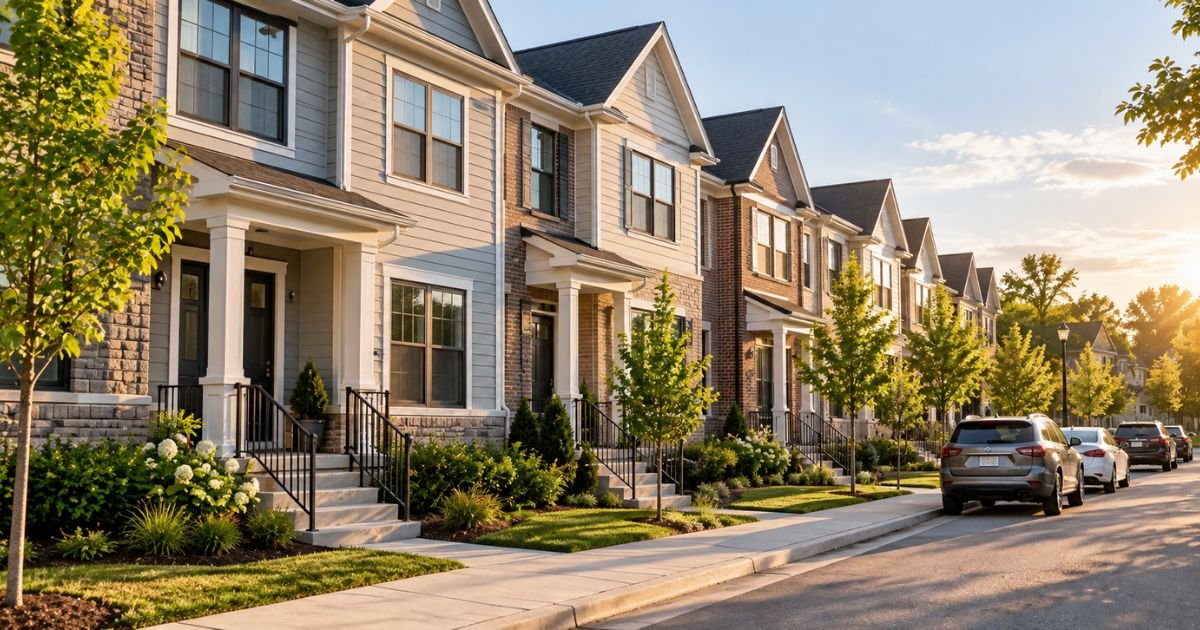
You may like the lower price tag and the idea that someone else mows the shared lawn. A townhouse can look like a starter house with fewer chores.
Townhouses can be a good investment if the HOA allows rentals, the dues stay reasonable, and you plan to hold for years. They are a weaker cash machine if fees, assessments, and rental caps eat the rent.
What Is a Townhouse Investment?
A townhouse is an attached home that usually shares one or two walls. You typically own the unit and the small lot under it. That fee-simple setup is closer to a house than a condo, where you often own only the interior airspace.
Most townhouse communities still have a homeowners association. The HOA may handle roofs, siding, lawns, or only shared streets and a pool. Read the documents. Coverage varies a lot.
National price snapshots in 2025 and 2026 often put typical townhouses below typical detached houses.
One 2026 comparison cited a median townhouse near $365,000 versus a median single-family home near $439,000. Local gaps can be much wider or much thinner. Treat those figures as a planning range.
Realtor.com research found townhome prices rose about 86.5% from 2014 to 2024. Single-family homes rose about 87.3%. Condos rose about 82.7%. Past decades are not a forecast.
For an investor, the unit is both a place to live and a rental asset. Cash flow is rent minus mortgage, tax, insurance, HOA dues, vacancy, and repairs you still own.
| Feature | Townhouse | Condo | Detached house |
|---|---|---|---|
| What you often own | Unit plus land under it | Interior unit | House and full lot |
| Typical HOA | Common, often mid-range | Common, often higher | Sometimes none |
| Exterior work | Shared or split with HOA | Mostly the association | Usually all yours |
| Buyer pool | Families, first-timers | Often smaller units | Widest resale pool |
| Rental rules | Check CC&Rs first | Often tighter | Usually freer |
HOA dues on listings with a fee had a national median around $135 a month in recent Realtor.com work.
Townhouse communities frequently run higher than that simple median, often in a rough $150 to $400 band. Amenity-heavy rows can cost more.
How the Money Usually Works
If you live there, the “return” is saved rent plus any price gain, minus all carrying costs. Transaction costs on a sale often take a large bite.
Many buy-versus-rent studies in 2026 still needed several years before buying pulled ahead.
If you rent it out, run the net number, not the listing rent.
- Gross rent
- Minus vacancy
- Minus HOA
- Minus tax and insurance
- Minus management if you hire it
- Minus a repair reserve
- Minus the mortgage
What is left is cash flow. In many 2026 metros that leftover is thin or negative after a standard investor loan. Appreciation then has to do the heavy lifting.
HOA dues do not build your equity. A $300 monthly fee is $3,600 a year that never pays the loan principal.
Possible Upsides
Townhouses can work when the location is tight and the rules are friendly.
The entry price is often lower than a similar detached house. That can mean a smaller down payment or a better street than you could buy standalone.
You usually own land. That is one reason townhome prices have often tracked houses more closely than stacked condos.
Shared walls can cut some exterior work when the HOA actually covers roofs and paint.
Family renters like the extra floors and a small yard more than a mid-rise studio. Lease terms can run longer than apartment turnover.
Financing is often simpler than a non-warrantable condo. Lenders still care about the project, occupancy mix, and reserves.
Those pluses show up only after you read the association books.
Risks You Should Weigh First
This is where first-time landlords get surprised.
HOA rental caps can block your plan. Some communities limit how many units may be rented or ban short-term stays. A rule change after you close can strand you.
Special assessments are real. Weak reserves plus a roof or lawsuit can produce a one-time bill of thousands per owner.
Dues drift up. Insurance, landscaping, and amenities rise. Your rent may not keep pace.
Shared walls mean shared problems. Noise, leaks, and fire spread are neighbor issues you cannot fully control.
Insurance can be messy. Some rows need a master policy. Others need a full homeowners policy. Loss-assessment coverage still matters. Confirm who insures the roof before you bid.
Appreciation is local. A glut of new attached product can cap price growth even if detached houses nearby stay tight.
Investor loans cost more. Down payments of 15% to 25% are common. Cash flow looks worse than the owner-occupant math on social media.
You can still get the 2 a.m. call for an interior problem the HOA will not touch.
If the association will not share a reserve study and rental rules in writing, walk.
Townhouse vs Condo vs House for Investors
Match the building type to the job.
| Question | Townhouse | Condo | Detached house |
|---|---|---|---|
| Cash flow after dues | Often middling | Often the weakest | Often the cleanest if there is no HOA |
| Hands-off exterior | Medium | Highest | Lowest |
| Assessment risk | Present | Often highest | Mostly your own repairs |
| Resale audience | Broad if priced right | Can shrink with high dues | Broadest |
| Best use | Live-in plus later rental | Urban convenience | Control and land |
A house-hack, where you live in one unit and rent another, is a different product. Most U.S. townhouses are single dwellings. Do not assume a duplex income stream.
Public REITs and funds give housing exposure without a leaky faucet. They will not let you pick the end unit on Maple Street.
Who a Townhouse May Fit
A townhouse may fit if you will live in it for several years, you like less yard work, and you checked that rentals are allowed if plans change.
It may also fit an investor in a job-rich suburb where attached homes are the affordable family product and HOA dues are modest.
It is a weaker fit if you need strong monthly cash flow from day one. It is also a weaker fit if the only units you can afford sit in a high-fee community with a thin reserve fund.
Keep emergency cash outside the house. Dues and assessments do not wait.
How You Can Check a Deal
If you still want to buy, slow the process down.
- Read the covenants, rental rules, and meeting minutes.
- Get the reserve study and the last two years of HOA financials.
- Ask what the master insurance covers and what you must insure.
- Price nearby rents from leased comps, not wishful asking rents.
- Stress the mortgage at a higher rate and one extra month of vacancy.
- Budget a special assessment even if the board says none is coming.
- Compare the same budget on a small detached house and a condo.
A local agent and an inspector who know attached housing can catch shared-wall defects a listing photo will hide.
FAQs About Are Townhouses a Good Investment
Q. Do townhouses appreciate like single-family homes?
A. Over some long stretches they have come close nationally. Your zip code and the local supply of new rows matter more than a national average. Land and school demand still drive most of the gain.
Q. Can I rent out a townhouse?
A. Only if the HOA and local law allow it. Many communities cap the share of rentals or require minimum lease terms. Get that in writing before you count on tenant income.
Q. Are HOA fees a deal-breaker?
A. Not by themselves. Fees that cover a roof and keep reserves healthy can be cheaper than doing that work alone. Fees that fund a clubhouse you will not use, plus a weak reserve, can wreck cash flow.
Q. Is a townhouse better than a condo as a rental?
A. Often it is a bit easier to finance and resell, and dues can be lower. It is not automatically profitable. Run the net rent after HOA, tax, and insurance.
Conclusion
Townhouses can be a good investment when you buy the land-and-home package at a fair price, the HOA is healthy, and you can hold through the years it takes for equity to show up. They sit between a condo and a detached house on cost, control, and chores.
They are a weak substitute for a no-HOA rental if dues, rental caps, or assessments dominate the file. Price gain is local. Cash flow is a spreadsheet, not a listing photo.
If that trade-off fits, read the association documents as carefully as the floor plan. If you need simple, liquid housing exposure, a fund or a plain house with no rental cap may fit better.
Disclaimer
This article is for general information only. It is not financial, tax, or legal advice, and it is not a recommendation to buy or rent out any townhouse. Prices, HOA rules, insurance, loan terms, and rents vary by community and change over time. Confirm current details with the association, a lender, and a qualified professional before you make an offer.